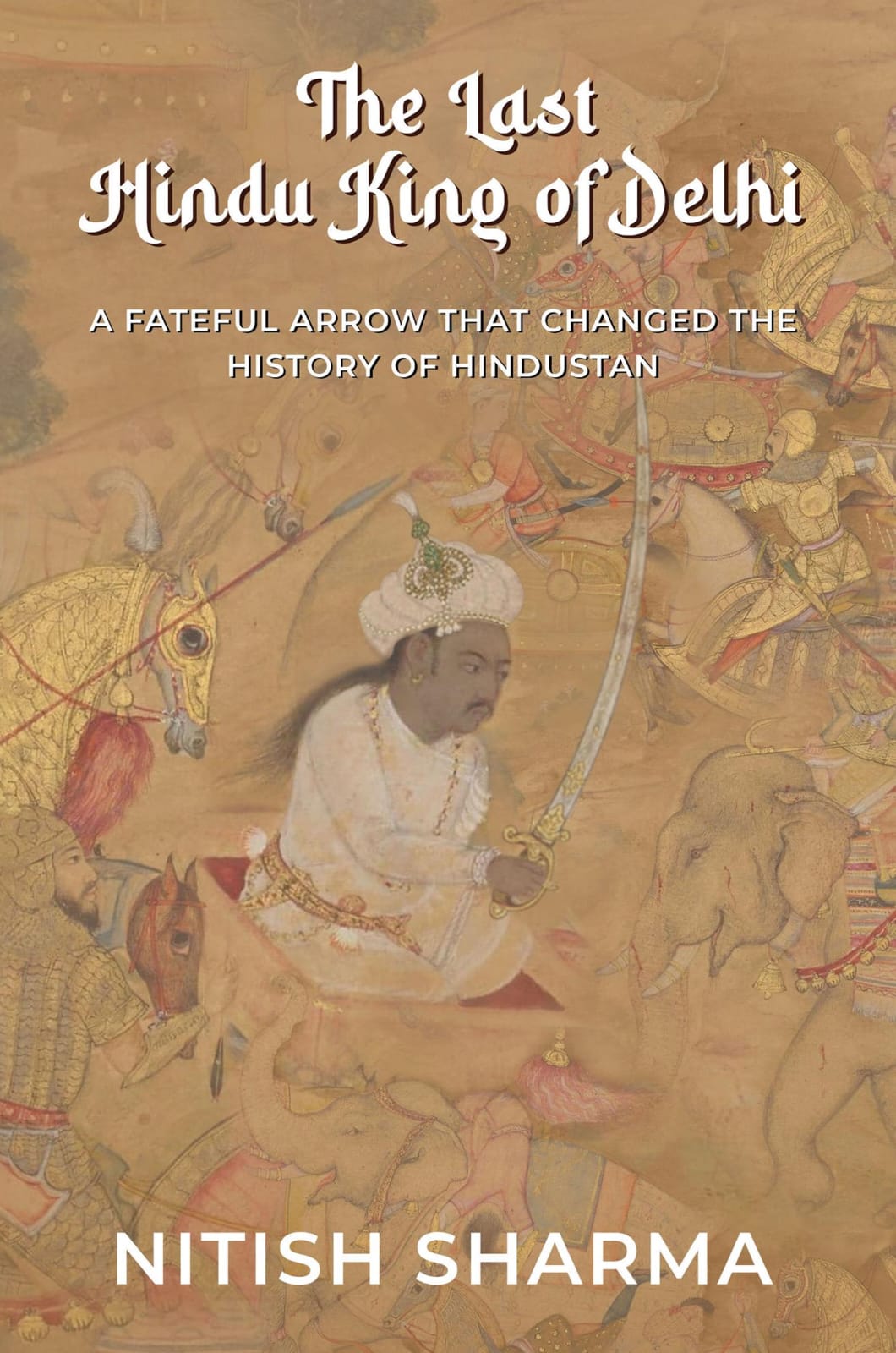
NEW DELHI: Exactly 470 years ago, on November 5, 1556, a stray arrow at the Second Battle of Panipat ended the reign of Samrat Hemchandra Vikramaditya, popularly known as Hemu, the last Hindu emperor to sit on the throne of Delhi and the supreme commander who led the Afghan Empire of Hindustan. While history textbooks have long reduced his rise to a footnote or dismissed him as a mere "vegetable vendor," new research sheds light on the economic and strategic masterstroke that powered his imperial ascent.
In his book, The Last Hindu King of Delhi: A Fateful Arrow That Changed the History of Hindustan, author and public relations professional Nitish Sharma reveals that Hemu was neither an accidental ruler nor a petty shopkeeper. Instead, he operated as a strategic trade contractor supplying the Afghan Sur army with saltpetre, the critical raw material required for military-grade gunpowder during the 16th-century artillery revolution.
Mughal court chroniclers such as Abul Fazl and Abdul Qadir Badayuni frequently used derogatory terms like bakkaal (trader) or sabzi farosh (greengrocer) to downplay Hemu’s military genius. Subsequent accounts further distorted his origin, claiming he merely sold table salt in Rewari. Sharma’s research proves that by controlling the saltpetre supply chains, Hemu made himself indispensable to the Afghan war machine.
This mastery over military logistics allowed Hemu to build trust with top Afghan commanders, rising rapidly through the ranks to become Superintendent of Markets, Chief of Intelligence, Commander-in-Chief, Prime Minister, and ultimately the ruler of Hindustan.
Undefeated in 22 consecutive battles, Hemu routed Mughal forces led by Tardi Beg Khan at Delhi in October 1556, reclaiming the capital and assuming the imperial title of Samrat Hemchandra Vikramaditya. His brief reign came to a tragic end on November 5, 1556, at Panipat, where he was captured and executed after an arrow struck his eye while leading from his war elephant.
Sharma’s work reframes Hemu’s legacy, establishing him as a visionary administrator and military contractor whose control over gunpowder logistics fundamentally shaped the trajectory of 16th-century India.